Dana Patterson · 8 November 2026
Optimizing Collaborative Workflows for Maintaining Technical Resource Accessibility Across Distributed Team Environments During Phased System Integrations
Organizations managing phased system integrations face the ongoing task of keeping technical resources accessible to teams spread across multiple locations and time zones, and researchers have documented how structured workflows help maintain continuity while systems transition in stages. Data from industry reports indicate that phased approaches reduce overall disruption compared to full cutovers, yet they require precise coordination to prevent gaps in documentation, code repositories, and shared databases. Those who've examined integration projects note that accessibility depends on clear permission structures, synchronized update cycles, and tools that support real-time visibility without requiring all participants to operate on identical schedules.
Core Elements of Phased Integrations
Phased system integrations typically unfold through sequential stages that allow teams to migrate components incrementally, and studies show this method supports testing at each step while legacy systems remain operational. Observers point out that distributed teams benefit when each phase includes defined checkpoints for resource handoffs, such as updated API documentation or revised access protocols. Evidence from technical implementations reveals that without these checkpoints, teams encounter version conflicts or locked files that stall progress across regions. In November 2026, reports highlighted continued growth in hybrid cloud migrations where organizations apply these phased methods to maintain uptime for global user bases.
Addressing Accessibility in Distributed Settings
Distributed environments introduce variables like differing network latencies and varying compliance requirements across jurisdictions, so workflows must incorporate standardized access layers that adapt to local constraints while preserving central control. Research indicates that role-based access controls combined with audit logs allow teams to track changes without centralizing every decision, and this setup proves effective when teams span multiple continents. People who've managed such projects often discover that shared dashboards displaying resource status help surface bottlenecks early, allowing adjustments before delays compound. What's interesting is how asynchronous communication channels complement these dashboards by enabling contributors in different time zones to review and approve updates at their convenience rather than forcing simultaneous sessions.
Workflow Optimization Techniques
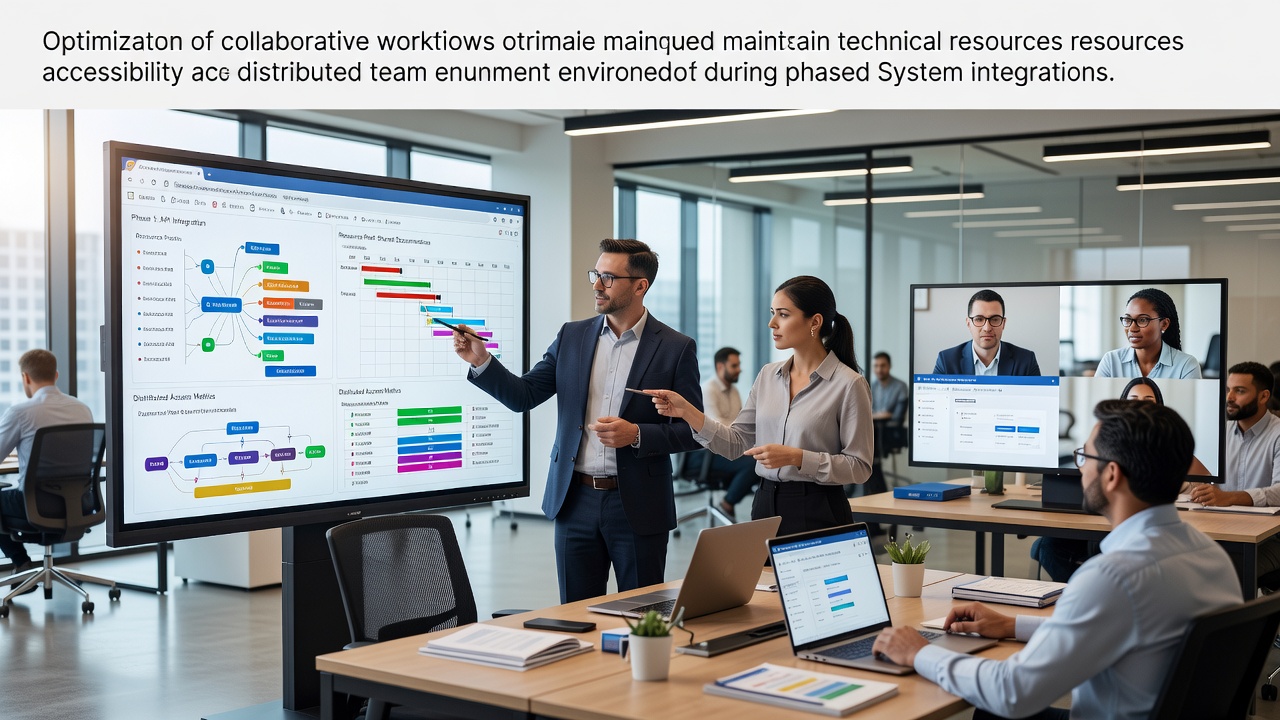
Effective optimization begins with mapping existing resource dependencies before any integration phase starts, and analysts have observed that visual dependency graphs clarify which assets require priority attention during transitions. Teams then establish version control practices that tag resources to specific phases, preventing accidental overwrites while new components come online. Data shows that integrating automated notification systems alerts relevant members when a resource enters a new phase or requires review, and this reduces the manual follow-up that can overwhelm smaller support groups. But here's the thing: success hinges on regular calibration of these notifications so they deliver actionable details without generating noise that leads to oversight.

Technology Enablers and Supporting Practices
Platforms that combine document management with integration tracking provide the backbone for maintaining accessibility, and according to findings from the National Institute of Standards and Technology such systems support consistent audit trails across distributed setups. NIST publications outline frameworks where metadata tagging links resources to integration milestones, making it straightforward for any team member to locate current versions. Additional practices include scheduled reconciliation sessions where representatives from each location verify access permissions align with the current phase status. Australian government digital transformation guidelines emphasize similar reconciliation steps in multi-site projects, noting improved continuity when teams adopt them consistently. Infrastructure department resources describe how these steps integrate with broader governance models used in large-scale technology shifts.
Measuring Outcomes and Adjusting Processes
Quantitative metrics such as mean time to resource access and error rates during handoffs serve as benchmarks for workflow effectiveness, and longitudinal data collected over multiple integration cycles shows measurable gains when teams refine permission matrices between phases. Those monitoring these indicators report that feedback loops built into the workflow allow rapid iteration on access policies without halting progress. Experts have observed that incorporating external benchmarks from research institutions helps calibrate internal targets against industry norms, creating reference points that distributed teams can use regardless of location.
Conclusion
Phased system integrations in distributed environments succeed when collaborative workflows prioritize consistent resource visibility and adaptive access controls, and ongoing data collection supports continuous refinement of these processes. Organizations that align their practices with established technical standards position themselves to handle transitions with fewer interruptions while preserving operational access for all participants throughout each stage.